Oxytocin (CAS 50-56-6) – Research Grade Peptide
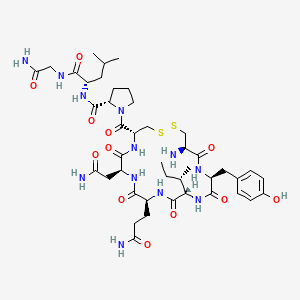
Oxytocin is a cyclic nonapeptide hormone with amino acid sequence CYIQNCPLG that also acts as a neurotransmitter in the brain; the principal uterine-contracting and milk-ejecting hormone of the posterior pituitary. Together with the neuropeptide vasopressin, it is believed to influence social cognition and behaviour. It has a role as a vasodilator agent and an oxytocic. It is a heterodetic cyclic peptide and a peptide hormone.
Research Context
Research Applications
Oxytocin is primarily studied for its roles in social bonding, emotional regulation, and reproductive health. Research has shown that this neuropeptide is involved in various therapeutic areas, including anxiety disorders, autism spectrum disorders, and maternal behaviors. Additionally, it has been explored in relation to metabolic health, body composition, and lipodystrophy. While oxytocin has not received broad FDA approval for specific indications, it is known for its use in inducing labor and controlling postpartum hemorrhage under trade names such as Pitocin.
History & Development
Oxytocin was first synthesized in 1953 by a team led by Dr. Vincent du Vigneaud, who later received the Nobel Prize in Chemistry for this work. The peptide's clinical applications began to gain traction in the mid-20th century, particularly for its use in obstetrics. The FDA approved Pitocin in 1972 for inducing labor and managing uterine atony. Notable design features of oxytocin include its cyclic structure, which contributes to its stability and activity; however, modifications to enhance its half-life and receptor affinity are ongoing in research settings.
Mechanism of Action
Oxytocin exerts its effects primarily through binding to the oxytocin receptor (OTR), which is a G-protein coupled receptor located in various tissues, including the brain and uterus. Upon binding, oxytocin activates downstream signaling pathways that lead to increased intracellular calcium levels and subsequent muscle contractions in the uterus. In the brain, oxytocin's action on OTRs is linked to the modulation of social behaviors, stress responses, and emotional bonding, highlighting its role in both reproductive and psychological functions.
Clinical Data
Published studies suggest that oxytocin may improve social cognition and reduce anxiety in individuals with autism. For instance, a study by Domes et al. (2010) in the journal Biological Psychiatry demonstrated that intranasal administration of oxytocin improved emotional recognition in subjects with autism spectrum disorders. Another notable study by Feldman et al. (2010) published in Psychoneuroendocrinology showed that oxytocin administration led to enhanced bonding between mothers and their infants, indicating its potential therapeutic benefits in enhancing maternal behaviors. These studies are part of ongoing Phase 2 and Phase 3 trials exploring oxytocin's efficacy in treating social deficits and anxiety disorders.
How It Compares
When compared to other peptides, oxytocin has distinct mechanisms and applications. For instance, while oxytocin is primarily involved in social bonding and reproductive functions, peptides like Ipamorelin and Sermorelin focus on growth hormone stimulation, which is beneficial for body composition and metabolic health. Oxytocin has a relatively short half-life, which contrasts with longer-acting peptides such as CJC-1295. In the context of GLP-1 receptor agonists, oxytocin's role in metabolic regulation differs from that of Semaglutide and Liraglutide, which are focused on glycemic control and weight loss through appetite regulation.
Solubility & Storage
Oxytocin is typically reconstituted using bacteriostatic water or sterile saline to ensure stability and sterility. For storage, the lyophilized form of oxytocin should be kept at -20°C to maintain its integrity, while the reconstituted solution is best stored at 2-8°C and used within 30 days to ensure optimal stability and efficacy.
Future Research Directions
Future research on oxytocin is exploring its potential in treating a range of conditions, including social anxiety, post-traumatic stress disorder (PTSD), and even its role in enhancing therapeutic outcomes in various psychiatric disorders. Emerging off-label interests also include investigating oxytocin's effects on metabolic processes and its potential applications in obesity management. As researchers continue to uncover the multifaceted roles of oxytocin, its therapeutic landscape may expand significantly in the coming years.
This peptide is available for wholesale & bulk synthesis. Get our rate sheet.
| CAS Number | 50-56-6 |
|---|---|
| Formula | C43H66N12O12S2 |
| Mol. Weight | 1007.2 g/mol |
| IUPAC Name | (2S)-1-[(4R,7S,10S,13S,16S,19R)-19-amino-7-(2-amino-2-oxoethyl)-10-(3-amino-3... |
| Grade | HPLC ≥98% |
Synthesis & Storage
Oxytocin is supplied as a lyophilized powder to ensure stability during transit.
For long-term storage of CAS 50-56-6, we recommend maintaining at -20°C.
Researchers must reconstitute this peptide with bacteriostatic water or sterile solvent only when ready for use.
Quality Control: All batches undergo rigorous HPLC purity testing (≥98%) prior to dispatch from our USA fulfillment center.