L-Ascorbic Acid (CAS 50-81-7) – Research Grade
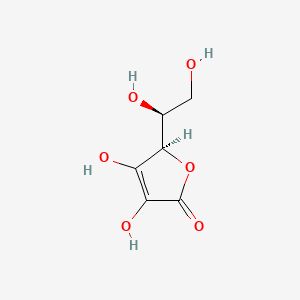
L-ascorbic acid is the L-enantiomer of ascorbic acid and conjugate acid of L-ascorbate. It has a role as a coenzyme, a flour treatment agent, a food antioxidant, a plant metabolite, a cofactor, a skin lightening agent, a geroprotector and a food colour retention agent. It is an ascorbic acid and a vitamin C. It is a conjugate acid of a L-ascorbate. It is an enantiomer of a D-ascorbic acid.
Research Context
L-Ascorbic Acid, commonly known as vitamin C, is a water-soluble vitamin that plays a crucial role in various biological processes and has numerous research applications. It is widely studied for its antioxidant properties, which help in neutralizing free radicals and protecting cells from oxidative stress. This compound is also essential for collagen synthesis, contributing to tissue repair and skin health, making it a key ingredient in dermatological research and cosmetic formulations.
Research Applications
The applications of L-Ascorbic Acid extend beyond basic nutrition. In pharmaceutical research, it is investigated for its potential therapeutic effects in preventing and treating various diseases, including scurvy and certain types of cancer. Additionally, its role in enhancing iron absorption makes it significant in studies focused on anemia and nutritional deficiencies. The compound is also being explored in the field of immunology for its potential to boost immune responses.
Mechanism of Action
The mechanism of action of L-Ascorbic Acid primarily involves its ability to donate electrons, which allows it to act as a reducing agent. This property is fundamental in its role as an antioxidant, as it helps regenerate other antioxidants such as vitamin E. Furthermore, L-Ascorbic Acid is essential in the hydroxylation of proline and lysine residues in collagen, a process vital for maintaining skin integrity and wound healing.
Solubility and Storage Advice
L-Ascorbic Acid is highly soluble in water, which facilitates its absorption in biological systems. However, it is sensitive to light, heat, and air, leading to degradation. For optimal stability, it should be stored in a cool, dark place and in airtight containers to minimize exposure to moisture and oxygen.
Future Research Directions
Future research on L-Ascorbic Acid is likely to focus on its potential role in chronic disease prevention and management, particularly in aging populations. Studies are also anticipated to explore the development of innovative delivery systems to enhance its bioavailability and efficacy. Furthermore, the exploration of its synergistic effects with other nutrients continues to be a promising area of investigation.
Need this compound? Check current availability and pricing.
| CAS Number | 50-81-7 |
|---|---|
| Formula | C6H8O6 |
| Mol. Weight | 176.12 g/mol |
| IUPAC Name | (2R)-2-[(1S)-1,2-dihydroxyethyl]-3,4-dihydroxy-2H-furan-5-one |
| Grade | Research Grade |
Technical Support & Logistics
Storage & Handling: L-Ascorbic Acid is strictly allocated for laboratory research use (RUO). Shipped in anti-static packaging.