Glycine (CAS 56-40-6) – Research Grade
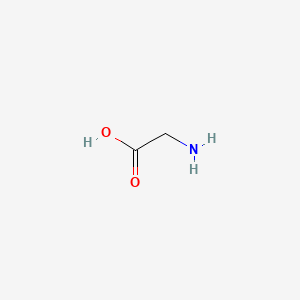
Glycine is the simplest (and the only achiral) proteinogenic amino acid, with a hydrogen atom as its side chain. It has a role as a nutraceutical, a hepatoprotective agent, an EC 2.1.2.1 (glycine hydroxymethyltransferase) inhibitor, a NMDA receptor agonist, a micronutrient, a fundamental metabolite and a neurotransmitter. It is an alpha-amino acid, a serine family amino acid and a proteinogenic amino acid. It is a conjugate base of a glycinium. It is a conjugate acid of a glycinate. It is a tautomer of a glycine zwitterion.
Research Context
Glycine, also known as aminoacetic acid or glycocoll, is the simplest amino acid and plays a vital role in various biological processes. Its unique properties make it a subject of extensive research across multiple fields, including biochemistry, pharmacology, and nutrition. Glycine is often utilized in the synthesis of proteins and peptides, serving as a building block for more complex molecules. Additionally, its role as a neurotransmitter in the central nervous system has garnered significant attention, particularly regarding its potential therapeutic applications in treating conditions such as schizophrenia, anxiety, and sleep disorders.
Research Applications
In the realm of biochemistry, glycine is extensively studied for its involvement in metabolic pathways, particularly those related to the synthesis of purines and heme. Furthermore, it has shown promise in enhancing muscle growth and recovery, making it a popular supplement among athletes. Glycine's anti-inflammatory and antioxidant properties are also being explored in the context of cardiovascular health, where it may help mitigate oxidative stress and improve endothelial function.
Mechanism of Action
Glycine functions primarily as an inhibitory neurotransmitter in the spinal cord and brainstem, facilitating the transmission of signals that regulate muscle tone and reflexes. Its mechanism involves the activation of glycine receptors, leading to an influx of chloride ions, which results in hyperpolarization of neurons. This action not only modulates excitatory neurotransmission but also promotes a calming effect on the nervous system, thereby contributing to its therapeutic potential.
Solubility and Storage Advice
Glycine is highly soluble in water, making it easy to incorporate into various formulations for research and therapeutic use. It is advisable to store glycine in a cool, dry place, away from direct sunlight, to maintain its stability and efficacy. Proper sealing and avoidance of moisture will further enhance its longevity.
Future Research Directions
Future studies are likely to delve deeper into glycine's role in metabolic disorders and its potential as a neuroprotective agent. Investigations into its synergistic effects when combined with other amino acids or compounds could yield novel therapeutic strategies. As research continues, glycine's multifaceted applications promise to expand, highlighting its significance in both health and disease management.
Need this compound? Check current availability and pricing.
| CAS Number | 56-40-6 |
|---|---|
| Formula | C2H5NO2 |
| Mol. Weight | 75.07 g/mol |
| IUPAC Name | 2-aminoacetic acid |
| Grade | Research Grade |
Technical Support & Logistics
Storage & Handling: Glycine is strictly allocated for laboratory research use (RUO). Shipped in anti-static packaging.