Epitalon (CAS 307297-39-8) – Research Grade Peptide
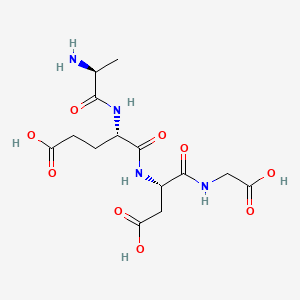
Epitalon is an organic molecular entity.
Research Context
Research Applications
Epitalon is primarily studied for its potential effects on aging and age-related conditions. Researchers are particularly interested in its applications within therapeutic areas such as metabolic health, longevity, and cell regeneration. Epitalon has been investigated for its role in enhancing telomere length and function, which may contribute to cellular aging processes. While there are currently no FDA-approved uses for Epitalon, its research applications have garnered attention in the fields of gerontology and regenerative medicine.
History & Development
Epitalon was originally developed in the late 1990s by a team of researchers at the Institute of Bioorganic Chemistry in Russia. The peptide was designed to mimic the naturally occurring pineal peptide epithalamin, which is believed to regulate circadian rhythms and influence aging. Although Epitalon has not received FDA approval, it has undergone various studies to assess its safety and efficacy. Notable design features include its resistance to enzymatic degradation, allowing for longer-lasting effects in the body. The peptide consists of a modified amino acid sequence that enhances its stability and bioavailability.
Mechanism of Action
Epitalon works primarily by influencing the activity of telomerase, an enzyme that plays a critical role in maintaining telomere length at the ends of chromosomes. By activating telomerase, Epitalon may promote cellular longevity and reduce the effects of aging at the cellular level. The peptide appears to bind to specific receptors involved in cell signaling pathways that regulate growth and survival. This interaction triggers downstream effects, including enhanced cellular proliferation and improved metabolic functions, contributing to its potential benefits in age-related health conditions.
Clinical Data
Published studies suggest that Epitalon may have beneficial effects on age-related biomarkers and overall health. For instance, a study led by Khavinson et al. demonstrated that Epitalon administration resulted in improved telomere length and cellular function in aged subjects. Another research effort, conducted by the same group, indicated a potential increase in life expectancy in animal models. These studies highlight Epitalon's promise in the field of gerontology, although further clinical trials are necessary to confirm these findings in human populations.
How It Compares
When comparing Epitalon to other peptides, several notable differences emerge. For example, while Epitalon focuses on telomerase activation and cellular longevity, Ipamorelin and CJC-1295 are primarily studied for their growth hormone-releasing properties. Ipamorelin has a shorter half-life but is often favored for its selective action and fewer side effects. In contrast, CJC-1295 offers a longer duration of action, making it suitable for sustained growth hormone release. Additionally, Sermorelin, another growth hormone-releasing peptide, shares similar mechanisms but may not have the same focus on telomere health as Epitalon. These distinctions illustrate how Epitalon occupies a unique niche in research related to aging and metabolic health.
Solubility & Storage
The recommended reconstitution solvent for Epitalon is sterile water or bacteriostatic water, which ensures optimal solubility. Once lyophilized, Epitalon should be stored in a cool, dry place, typically at temperatures between 2°C to 8°C. After reconstitution, it is advised to keep the peptide refrigerated and to use it within a stability window of approximately 2 to 4 weeks to maintain its efficacy.
Future Research Directions
Future research on Epitalon is exploring its potential applications beyond aging, including its effects on metabolic disorders, cognitive function, and overall healthspan. Researchers are investigating the peptide's role in enhancing immune response and its possible therapeutic benefits in conditions such as neurodegenerative diseases. Additionally, emerging off-label interests include the use of Epitalon in enhancing athletic performance and recovery, although these applications require more robust clinical evidence to substantiate their safety and efficacy.
This peptide is available for wholesale & bulk synthesis. Get our rate sheet.
| CAS Number | 307297-39-8 |
|---|---|
| Formula | C14H22N4O9 |
| Mol. Weight | 390.35 g/mol |
| IUPAC Name | (4S)-4-[[(2S)-2-aminopropanoyl]amino]-5-[[(2S)-3-carboxy-1-(carboxymethylamin... |
| Grade | HPLC ≥98% |
Synthesis & Storage
Epitalon is supplied as a lyophilized powder to ensure stability during transit.
For long-term storage of CAS 307297-39-8, we recommend maintaining at -20°C.
Researchers must reconstitute this peptide with bacteriostatic water or sterile solvent only when ready for use.
Quality Control: All batches undergo rigorous HPLC purity testing (≥98%) prior to dispatch from our USA fulfillment center.