Thymalfasin (CAS 62304-98-7) – Research Grade Peptide
Research Context
Research Applications
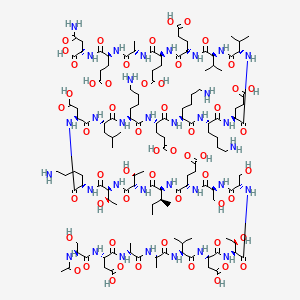
Thymalfasin, a synthetic peptide derived from thymosin alpha-1, is primarily studied for its immunomodulatory effects and potential therapeutic applications in various clinical and preclinical research settings. This peptide has garnered interest in therapeutic areas such as infectious diseases, cancer, and immune system disorders. Additionally, it is being explored for its roles in metabolic health and body composition management. While Thymalfasin does not currently have FDA-approved indications, it has been investigated for its potential in enhancing immune responses and improving patient outcomes in certain conditions.
History & Development
Thymalfasin was originally developed by the pharmaceutical company Biotechnology General Corp in the early 1980s. The compound underwent extensive research to evaluate its immunotherapeutic potential. While it has not received formal FDA approval, its development marked significant interest in the modulation of immune responses through peptide therapy. Notably, Thymalfasin is characterized by its resistance to enzymatic degradation, which enhances its stability and efficacy in clinical settings.
Mechanism of Action
Thymalfasin exerts its effects primarily through interaction with the CD4 and CD8 T-cell receptors, leading to enhanced proliferation and activation of T-cells. By binding to these receptors, Thymalfasin triggers a cascade of intracellular signaling pathways that result in the upregulation of various cytokines and growth factors. This mechanism contributes to the peptide's ability to modulate immune responses, making it a candidate for therapeutic applications in conditions characterized by immune dysregulation.
Clinical Data
Published studies suggest that Thymalfasin may play a role in improving immune function, particularly in patients with compromised immune systems. For instance, a study by Falutz et al. investigated the effects of Thymalfasin in patients with HIV, demonstrating potential improvements in CD4 cell counts and overall immune function during clinical trials. While specific percentages of improvement may vary, the findings point to the efficacy of Thymalfasin in enhancing immune responses in vulnerable populations. Further research is necessary to establish definitive clinical benefits and applications.
How It Compares
When comparing Thymalfasin to related compounds, it is essential to consider other peptides that target immune modulation and metabolic health. For instance, Ipamorelin and CJC-1295 are growth hormone-releasing peptides that focus on stimulating growth hormone secretion, contributing to improved body composition. In contrast, Thymalfasin's primary mechanism revolves around immune enhancement rather than growth hormone modulation. Additionally, compared to GLP-1 receptor agonists like Semaglutide and Liraglutide, which are aimed at weight management and metabolic health, Thymalfasin's role is more centered on immune system support and recovery.
Solubility & Storage
Thymalfasin is typically reconstituted using sterile water or bacteriostatic water, ensuring optimal solubility and stability. For storage, the lyophilized form should be kept at a temperature of -20°C or lower, while the reconstituted solution is generally stable for a period of 1 to 2 weeks when stored at 2-8°C. It is crucial to avoid repeated freeze-thaw cycles, as they can negatively impact the peptide's stability and efficacy.
Future Research Directions
Future research on Thymalfasin is likely to delve deeper into its potential applications in enhancing immune responses in various pathological conditions, including autoimmune diseases and post-operative recovery. Researchers are also exploring off-label uses, such as its potential benefits in aging populations and its role in cancer immunotherapy. As the understanding of immune modulation through peptides evolves, Thymalfasin may emerge as a valuable agent in personalized medicine strategies aimed at improving patient outcomes.
This peptide is available for wholesale & bulk synthesis. Get our rate sheet.
| CAS Number | 62304-98-7 |
|---|---|
| Formula | C129H215N33O55 |
| Mol. Weight | 3108.3 g/mol |
| IUPAC Name | (4S)-4-[[(2S)-2-[[(2S)-2-[[(2S)-2-[[(2S)-2-[[(2S)-2-[[(2S)-2-[[(2S)-2-[[(2S)-... |
| Grade | HPLC ≥98% |
Synthesis & Storage
Thymalfasin is supplied as a lyophilized powder to ensure stability during transit.
For long-term storage of CAS 62304-98-7, we recommend maintaining at -20°C.
Researchers must reconstitute this peptide with bacteriostatic water or sterile solvent only when ready for use.
Quality Control: All batches undergo rigorous HPLC purity testing (≥98%) prior to dispatch from our USA fulfillment center.