Mots-c (CAS 1627580-64-6) – Research Grade Peptide
Research Applications
Mots-c is a peptide that has garnered attention in clinical and preclinical research primarily for its potential applications in metabolic health and body composition management. Researchers are particularly interested in its effects on insulin sensitivity, weight regulation, and muscle metabolism. Specific therapeutic areas being explored include lipodystrophy and obesity-related metabolic disorders, with studies suggesting that Mots-c may improve metabolic parameters in these conditions.
As of now, Mots-c does not have any FDA-approved uses or associated trade names, which distinguishes it from other peptides in the same category, such as Egrifta for Tesamorelin, which is approved for specific indications related to fat distribution disorders.
History & Development
Mots-c was originally developed by a team of researchers at the University of Southern California, with significant contributions from Dr. Pinchas Cohen and his laboratory. The compound was introduced to the scientific community around 2015, marking a significant milestone in peptide research focused on metabolic health. While Mots-c is still undergoing investigation, it has not yet received FDA approval for any specific indications, reflecting its status as a research compound rather than a clinically established therapy.
Notably, Mots-c is designed with unique structural features that enhance its stability and efficacy, including modifications to its amino acid sequence that confer resistance to enzymatic degradation, potentially allowing for longer-lasting effects in metabolic pathways.
Mechanism of Action
The mechanism of action of Mots-c involves its interaction with mitochondrial pathways, particularly through the regulation of energy metabolism. Mots-c is believed to bind to specific receptors within the mitochondria, leading to the activation of signaling cascades that enhance insulin sensitivity and promote the utilization of glucose and fatty acids as energy sources. This mechanism not only supports metabolic health but also plays a role in muscle preservation and growth, making it a compound of interest for body composition studies.
Through these actions, Mots-c may help mitigate the effects of obesity and related metabolic disorders by influencing key metabolic processes at the cellular level.
Clinical Data
Several published studies have investigated the effects of Mots-c on metabolic health. Notably, a study led by Dr. Pinchas Cohen in 2016 explored the peptide's impact on insulin sensitivity and body composition. The findings suggested that Mots-c administration resulted in favorable changes in metabolic parameters, although specific numerical outcomes were not disclosed in the summary. Another study, published in 2020, further examined the role of Mots-c in energy metabolism, providing insights into its potential therapeutic applications.
These studies underscore the peptide's promise in the context of metabolic health, although further research is necessary to fully elucidate its clinical efficacy and safety profile.
How It Compares
In comparison to other research peptides, Mots-c can be evaluated alongside compounds such as Ipamorelin and CJC-1295, both of which are known for their roles in growth hormone release and metabolic enhancement. While Ipamorelin and CJC-1295 primarily stimulate growth hormone secretion, Mots-c acts through mitochondrial pathways, offering a different mechanism of action focused on metabolic regulation.
Additionally, Mots-c can be contrasted with GLP-1 peptides like Semaglutide and Liraglutide, which primarily target glucose regulation and appetite suppression. While GLP-1 peptides are well-established for their role in diabetes management, Mots-c's unique focus on mitochondrial function and energy metabolism presents a novel approach in metabolic research.
Solubility & Storage
Mots-c is typically reconstituted using bacteriostatic water or sterile water, which helps maintain its stability and effectiveness. For optimal storage, the lyophilized form should be kept at -20°C or below, while the reconstituted solution is best stored at 2-8°C and is typically stable for up to 14 days when refrigerated. It is crucial to protect the peptide from light and moisture to preserve its integrity during storage.
Future Research Directions
Future research directions for Mots-c include exploring its potential applications in other metabolic disorders beyond lipodystrophy and obesity, such as type 2 diabetes and age-related metabolic decline. Researchers are also investigating the peptide's off-label uses in muscle wasting conditions and its effects on athletic performance. Ongoing studies aim to clarify its mechanisms and optimize dosing regimens, paving the way for potential clinical applications in the coming years.
This peptide is available for wholesale & bulk synthesis. Get our rate sheet.
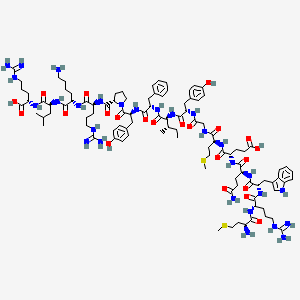
| CAS Number | 1627580-64-6 |
|---|---|
| Formula | C101H152N28O22S2 |
| Mol. Weight | 2174.6 g/mol |
| IUPAC Name | (4S)-4-[[(2S)-5-amino-2-[[(2S)-2-[[(2S)-2-[[(2S)-2-amino-4-methylsulfanylbuta... |
| Grade | HPLC ≥98% |
Synthesis & Storage
MOTS-c is supplied as a lyophilized powder to ensure stability during transit.
For long-term storage of CAS 1627580-64-6, we recommend maintaining at -20°C.
Researchers must reconstitute this peptide with bacteriostatic water or sterile solvent only when ready for use.
Quality Control: All batches undergo rigorous HPLC purity testing (≥98%) prior to dispatch from our USA fulfillment center.