Ipamorelin (CAS 170851-70-4) – Research Grade Peptide
Research Applications
Ipamorelin is primarily studied for its potential in promoting growth hormone release, making it a focus in clinical and preclinical research related to metabolic health, body composition, and lipodystrophy. Researchers are particularly interested in its ability to stimulate endogenous growth hormone secretion without significantly increasing cortisol levels, which can be beneficial for patients with growth hormone deficiency or conditions related to metabolic dysregulation.
While Ipamorelin does not currently have FDA-approved uses, its mechanism and applications are often compared with other growth hormone-releasing peptides. Its therapeutic potential is under investigation for various conditions, including obesity management and muscle wasting disorders.
History & Development
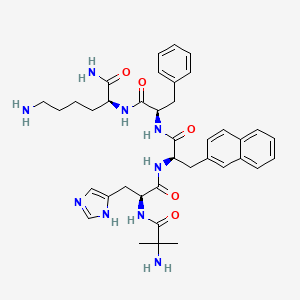
Ipamorelin was developed in the late 1990s by the pharmaceutical company Gensci as a selective growth hormone secretagogue. The peptide was designed to be a potent and selective agonist of the growth hormone secretagogue receptor (GHS-R), featuring a unique structure that allows for enhanced stability and a favorable pharmacokinetic profile. Although Ipamorelin has not received FDA approval, its development has paved the way for ongoing research into its potential therapeutic applications.
Mechanism of Action
Ipamorelin functions by selectively binding to the growth hormone secretagogue receptor (GHS-R) located on pituitary cells. Upon binding, it triggers a cascade of intracellular events that lead to the release of growth hormone from the anterior pituitary gland. This release subsequently stimulates the liver and other tissues to produce insulin-like growth factor 1 (IGF-1), which plays a crucial role in growth and metabolism. The peptide is noted for its ability to stimulate growth hormone release without significantly raising levels of other hormones such as cortisol and prolactin, which is a desirable feature in therapeutic applications.
Clinical Data
Published studies suggest that Ipamorelin is effective in increasing serum growth hormone levels and improving body composition. For instance, research conducted by Stanley et al. in a Phase 2 trial demonstrated that subjects receiving Ipamorelin showed notable improvements in lean body mass and reductions in fat mass. Additionally, another study by Falutz et al. investigated its effects on patients with HIV-associated lipodystrophy, reporting significant changes in body composition and metabolic parameters. These findings highlight the peptide's potential in managing conditions associated with growth hormone deficiency and metabolic disorders.
How It Compares
Ipamorelin is often compared with other growth hormone-releasing peptides such as CJC-1295 and Sermorelin. While all three peptides aim to stimulate growth hormone release, they differ in their mechanisms and effects. For instance, CJC-1295 has a longer half-life due to its ability to bind to albumin, providing sustained growth hormone release, whereas Sermorelin is a shorter-acting peptide that may require more frequent dosing.
Ipamorelin is also compared with GHRP-6, another growth hormone secretagogue, which tends to increase cortisol levels alongside growth hormone. This difference makes Ipamorelin a more favorable option for those seeking to minimize unwanted hormonal side effects.
Solubility & Storage
Ipamorelin is typically reconstituted using sterile water or bacteriostatic water. Once reconstituted, it is recommended to store the peptide at temperatures between 2-8°C (36-46°F) to maintain its stability. For lyophilized forms, a cool and dry environment is ideal, while the reconstituted solution should be used within 2-3 weeks for optimal effectiveness, although some studies suggest it may remain stable for longer under proper conditions.
Future Research Directions
Future research on Ipamorelin is exploring its potential applications beyond growth hormone deficiency, particularly in the areas of obesity management, muscle wasting, and age-related decline in growth hormone levels. Researchers are also investigating its off-label uses in enhancing recovery from exercise and its effects on metabolic syndrome. As understanding of its mechanisms deepens, Ipamorelin may find broader applications in regenerative medicine and the treatment of age-related conditions.
This peptide is available for wholesale & bulk synthesis. Get our rate sheet.
| CAS Number | 170851-70-4 |
|---|---|
| Formula | C38H49N9O5 |
| Mol. Weight | 711.9 g/mol |
| IUPAC Name | (2S)-6-amino-2-[[(2R)-2-[[(2R)-2-[[(2S)-2-[(2-amino-2-methylpropanoyl)amino]-... |
| Grade | HPLC ≥98% |
Synthesis & Storage
Ipamorelin is supplied as a lyophilized powder to ensure stability during transit.
For long-term storage of CAS 170851-70-4, we recommend maintaining at -20°C.
Researchers must reconstitute this peptide with bacteriostatic water or sterile solvent only when ready for use.
Quality Control: All batches undergo rigorous HPLC purity testing (≥98%) prior to dispatch from our USA fulfillment center.