Lanreotide (CAS 108736-35-2) – Research Grade Peptide
Research Applications
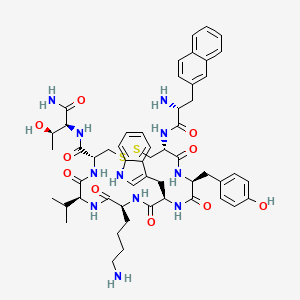
Lanreotide is primarily studied for its therapeutic effects in various clinical and preclinical research settings, particularly in the management of neuroendocrine tumors and acromegaly. It is classified as a long-acting somatostatin analog that mimics the action of natural somatostatin, a hormone involved in inhibiting growth hormone release. Lanreotide is also being researched for its potential benefits in other therapeutic areas, including metabolic health, body composition, and lipodystrophy. The peptide is known commercially under the trade name Somatuline, which has received FDA approval for the treatment of acromegaly and certain types of neuroendocrine tumors.
History & Development
Lanreotide was developed by the pharmaceutical company Ipsen in collaboration with the University of Milan, with its initial development beginning in the late 1980s. The peptide gained significant regulatory milestones, receiving FDA approval in 2007 for the treatment of acromegaly and later for the management of gastroenteropancreatic neuroendocrine tumors. Notably, Lanreotide features a modified amino acid sequence that enhances its resistance to enzymatic degradation, allowing for sustained therapeutic effects compared to its natural counterpart.
Mechanism of Action
At the cellular level, Lanreotide functions primarily by binding to somatostatin receptors, specifically subtype 2 (SSTR2), which are prevalent in various tissues, including the pituitary gland and neuroendocrine tumors. Upon binding, it activates intracellular signaling pathways that inhibit the secretion of growth hormone and other hormones such as insulin and glucagon. This action results in decreased cellular proliferation and reduced hormone levels in circulation, contributing to its effectiveness in treating conditions like acromegaly and managing neuroendocrine tumors.
Clinical Data
Several published studies have highlighted the clinical efficacy of Lanreotide. For instance, a Phase 3 study led by 'P. J. A. H. de Herder et al.' demonstrated the peptide's effectiveness in controlling tumor growth in patients with neuroendocrine tumors, showing a significant reduction in tumor size in a subset of participants. Another study by 'Falutz et al.' reported that Lanreotide effectively reduced growth hormone levels in patients with acromegaly, emphasizing its role in hormone normalization. These studies suggest that Lanreotide is an effective therapeutic option for managing these complex conditions.
How It Compares
Lanreotide is often evaluated alongside other peptides that influence hormonal pathways. For instance, compared to Ipamorelin and CJC-1295, which stimulate growth hormone release, Lanreotide acts primarily as an inhibitor of growth hormone secretion. While Ipamorelin has a shorter half-life and is primarily used for growth hormone stimulation, Lanreotide's long-acting formulation provides sustained effects suitable for chronic conditions like acromegaly. In the context of GLP-1 peptides, Lanreotide can be compared with Semaglutide, which is primarily used for weight management and glycemic control. While Semaglutide promotes insulin secretion and reduces appetite, Lanreotide's mechanism focuses on hormone inhibition, showcasing distinct therapeutic applications.
Solubility & Storage
For reconstitution, Lanreotide is typically dissolved in bacteriostatic water or sterile water, depending on the specific formulation guidelines. The lyophilized form of Lanreotide should be stored at a temperature of 2-8°C (36-46°F) to maintain stability. Once reconstituted, the solution can generally be stored at refrigerated temperatures and is recommended for use within 28 days to ensure potency and efficacy.
Future Research Directions
Future research on Lanreotide is exploring its potential applications beyond its current FDA-approved uses. Researchers are investigating its efficacy in treating various metabolic disorders, including obesity and diabetes, where hormonal regulation plays a crucial role. Additionally, there is emerging interest in off-label uses of Lanreotide for conditions such as polycystic ovary syndrome (PCOS) and other hormone-related disorders, highlighting its versatility as a therapeutic agent in endocrinology.
This peptide is available for wholesale & bulk synthesis. Get our rate sheet.
| CAS Number | 108736-35-2 |
|---|---|
| Formula | C54H69N11O10S2 |
| Mol. Weight | 1096.3 g/mol |
| IUPAC Name | (4R,7S,10S,13R,16S,19R)-10-(4-aminobutyl)-N-[(2S,3R)-1-amino-3-hydroxy-1-oxob... |
| Grade | HPLC ≥98% |
Synthesis & Storage
Lanreotide is supplied as a lyophilized powder to ensure stability during transit.
For long-term storage of CAS 108736-35-2, we recommend maintaining at -20°C.
Researchers must reconstitute this peptide with bacteriostatic water or sterile solvent only when ready for use.
Quality Control: All batches undergo rigorous HPLC purity testing (≥98%) prior to dispatch from our USA fulfillment center.