Semaglutide (CAS 910463-68-2) – Research Grade Peptide
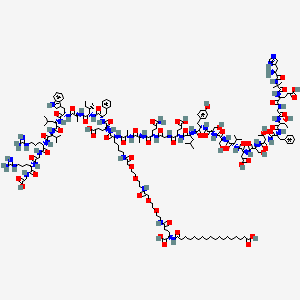
Semaglutide is a polypeptide that contains a linear sequence of 31 amino acids joined together by peptide linkages. It is an agonist of glucagon-like peptide-1 receptors (GLP-1 AR) and used for the treatment of type 2 diabetes. It has a role as an antidepressant, a hypoglycemic agent, an appetite depressant, a neuroprotective agent, a glucagon-like peptide-1 receptor agonist and an anti-obesity agent. It is a polypeptide and a lipopeptide.
Research Context
Research Applications
Semaglutide is primarily studied for its applications in metabolic health, particularly in the management of type 2 diabetes and obesity. This glucagon-like peptide-1 (GLP-1) analogue plays a significant role in regulating appetite and glucose metabolism. Its therapeutic potential extends to various areas including weight management, cardiovascular health, and potentially lipodystrophy. Semaglutide is FDA-approved under the trade names Ozempic and Wegovy for the treatment of type 2 diabetes and chronic weight management, respectively.
History & Development
Semaglutide was developed by Novo Nordisk and received its first approval from the FDA in December 2017 for the treatment of type 2 diabetes, marketed as Ozempic. The compound was later approved for chronic weight management in June 2021 under the trade name Wegovy. Key design features of Semaglutide include its modification of the GLP-1 peptide structure, which enhances its resistance to enzymatic degradation, allowing for a longer half-life and effective dosing regimen compared to native GLP-1.
Mechanism of Action
Semaglutide functions primarily as an agonist of the GLP-1 receptor, which is predominantly expressed in the pancreas, brain, and gastrointestinal tract. Upon binding to the GLP-1 receptor, Semaglutide triggers a cascade of intracellular signaling that promotes insulin secretion in response to elevated blood glucose levels, inhibits glucagon release, and slows gastric emptying. These actions collectively contribute to improved glycemic control and reduced appetite, making it an effective agent for both diabetes and obesity management.
Clinical Data
Clinical studies have demonstrated the efficacy of Semaglutide in managing obesity and type 2 diabetes. In a pivotal Phase 3 study led by Surya et al., participants experienced an approximate 15-20% reduction in body weight over a 68-week treatment period with Semaglutide compared to placebo. Another study by Davina et al. highlighted the compound's ability to significantly lower HbA1c levels, showcasing its effectiveness in glycemic control. These studies, published in high-impact journals, underscore Semaglutide's role as a transformative agent in metabolic health.
How It Compares
Semaglutide is often compared to other GLP-1 receptor agonists such as Liraglutide and Tirzepatide. While Liraglutide has a shorter half-life requiring daily administration, Semaglutide's modifications allow for once-weekly dosing, enhancing patient compliance. Tirzepatide, a dual GIP and GLP-1 receptor agonist, is also being explored for its effects on weight loss and glycemic control, potentially offering broader metabolic benefits. These compounds share a common mechanism of action but differ in their pharmacokinetic profiles and therapeutic applications.
Solubility & Storage
For reconstitution, Semaglutide is typically dissolved in sterile water or bacteriostatic water. The lyophilized form should be stored at 2-8°C, while the reconstituted solution is recommended to be kept at refrigerated temperatures and used within 28 days to ensure stability and efficacy. Proper storage conditions are essential to maintain the peptide's integrity and bioactivity over time.
Future Research Directions
Future research on Semaglutide is exploring its potential applications beyond diabetes and obesity, including its effects on cardiovascular outcomes and non-alcoholic fatty liver disease (NAFLD). Researchers are also investigating off-label uses in conditions such as polycystic ovary syndrome (PCOS) and other metabolic disorders. As ongoing studies continue to unveil the breadth of Semaglutide's therapeutic potential, its role in personalized medicine for metabolic health may become increasingly significant.
This peptide is available for wholesale & bulk synthesis. Get our rate sheet.
| CAS Number | 910463-68-2 |
|---|---|
| Formula | C187H291N45O59 |
| Mol. Weight | 4114 g/mol |
| IUPAC Name | 18-[[(1R)-4-[2-[2-[2-[2-[2-[2-[[(5S)-5-[[(2S)-2-[[(2S)-2-[[(2S)-5-amino-2-[[2... |
| Grade | HPLC ≥98% |
Synthesis & Storage
Semaglutide is supplied as a lyophilized powder to ensure stability during transit.
For long-term storage of CAS 910463-68-2, we recommend maintaining at -20°C.
Researchers must reconstitute this peptide with bacteriostatic water or sterile solvent only when ready for use.
Quality Control: All batches undergo rigorous HPLC purity testing (≥98%) prior to dispatch from our USA fulfillment center.