Sirolimus (CAS 53123-88-9) – Research Grade
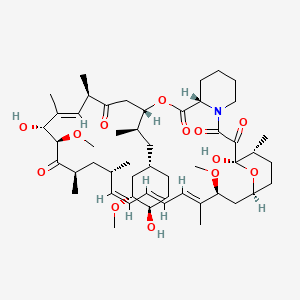
Sirolimus is a macrolide lactam isolated from Streptomyces hygroscopicus consisting of a 29-membered ring containing 4 trans double bonds, three of which are conjugated. It is an antibiotic, immunosupressive and antineoplastic agent. It has a role as an immunosuppressive agent, an antineoplastic agent, an antibacterial drug, a mTOR inhibitor, a bacterial metabolite, an anticoronaviral agent and a geroprotector. It is a cyclic acetal, a cyclic ketone, an ether, a secondary alcohol, an organic heterotricyclic compound, an antibiotic antifungal drug and a macrolide lactam.
Research Context
Sirolimus, also known as rapamycin, is a potent immunosuppressant and anti-proliferative agent that has garnered significant attention in the fields of transplantation and oncology. Its unique properties make it a critical component in preventing organ transplant rejection and in the treatment of various cancers, particularly those characterized by hyperactive mTOR signaling pathways.
Research Applications
Research on sirolimus has expanded beyond its initial use in organ transplantation. It is now being explored in various therapeutic contexts, including:
- Prevention of coronary artery disease in transplant patients
- Management of certain types of cancer, such as renal cell carcinoma
- Treatment of rare genetic disorders like tuberous sclerosis complex
- Potential applications in age-related diseases due to its effects on cellular senescence
Mechanism of Action
Sirolimus functions primarily by inhibiting the mammalian target of rapamycin (mTOR), a key regulator of cell growth and proliferation. By binding to the FKBP-12 protein, sirolimus forms a complex that inhibits mTORC1, leading to decreased protein synthesis and cell cycle progression. This mechanism is particularly relevant in conditions where aberrant cell growth is a concern, making sirolimus an attractive candidate for cancer therapies.
Solubility and Storage Advice
Sirolimus exhibits limited solubility in water but is soluble in organic solvents such as methanol and ethanol. For optimal storage, sirolimus should be kept in a cool, dry place away from light to maintain its stability and efficacy. It is advisable to store the compound at controlled room temperature and to protect it from moisture.
Future Research Directions
Future investigations into sirolimus are likely to focus on combination therapies, particularly with other immunotherapeutic agents or targeted therapies to enhance its efficacy. Additionally, research will continue to explore its potential benefits in metabolic disorders and age-related diseases, as well as the development of new formulations to improve its bioavailability and therapeutic index.
Need this compound? Check current availability and pricing.
| CAS Number | 53123-88-9 |
|---|---|
| Formula | C51H79NO13 |
| Mol. Weight | 914.2 g/mol |
| IUPAC Name | (1R,9S,12S,15R,16E,18R,19R,21R,23S,24E,26E,28E,30S,32S,35R)-1,18-dihydroxy-12... |
| Grade | Research Grade |
Technical Support & Logistics
Storage & Handling: Sirolimus is strictly allocated for laboratory research use (RUO). Shipped in anti-static packaging.