Oxytocin (CAS Oxytocin) – Wholesale & Research Grade
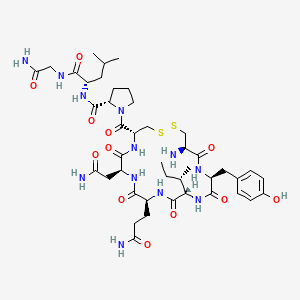
Oxytocin is a cyclic nonapeptide hormone with amino acid sequence CYIQNCPLG that also acts as a neurotransmitter in the brain; the principal uterine-contracting and milk-ejecting hormone of the posterior pituitary. Together with the neuropeptide vasopressin, it is believed to influence social cognition and behaviour. It has a role as an oxytocic and a vasodilator agent. It is a peptide hormone and a heterodetic cyclic peptide.
Research Context
Oxytocin, often referred to as the "love hormone" or "bonding hormone," is a peptide that plays a crucial role in various physiological and psychological processes. Its applications in research are diverse, spanning fields such as neuroscience, psychology, and reproductive health.
Research Applications
Studies have shown that oxytocin is pivotal in social bonding, maternal behaviors, and emotional regulation. Researchers are exploring its potential in treating conditions like autism spectrum disorders, anxiety, and depression. Additionally, its role in labor and childbirth has made it a focal point for obstetric studies, particularly in understanding the mechanisms of uterine contractions.
Mechanism of Action
Oxytocin primarily acts on the oxytocin receptors located in various tissues, including the brain and uterus. Binding to these receptors triggers a cascade of intracellular events that enhance social recognition, promote trust, and even influence emotional responses. This hormone is also involved in facilitating the ejection of milk during breastfeeding, thereby enhancing mother-infant bonding.
Solubility and Storage Advice
Oxytocin is soluble in water and can be stored at -20°C for long-term preservation. It is essential to avoid repeated freeze-thaw cycles, as this can lead to degradation of the peptide. When preparing working solutions, it is advisable to use sterile techniques to maintain the integrity and efficacy of oxytocin for experimental applications.
Future Research Directions
As interest in oxytocin's functions continues to grow, future research may delve into its role in neuropsychiatric disorders and its potential therapeutic applications. Investigating the peptide's effects on trust and social behaviors in various populations can provide deeper insights into its therapeutic benefits. Moreover, the development of oxytocin analogs and delivery methods could enhance its clinical applications, making it a promising subject for ongoing studies.
| CAS Number | Oxytocin |
|---|---|
| Formula | C43H66N12O12S2 |
| Mol. Weight | 1007.2 g/mol |
| IUPAC Name | (2S)-1-[(4R,7S,10S,13S,16S,19R)-19-amino-7-(2-amino-2-oxoethyl)-10-(3-amino-3... |
| Grade | HPLC ≥98% |
Synthesis & Storage
Oxytocin is supplied as a lyophilized powder to ensure stability during transit.
For long-term storage of CAS Oxytocin, we recommend maintaining at -20°C.
Researchers must reconstitute this peptide with bacteriostatic water or sterile solvent only when ready for use.
Quality Control: All batches undergo rigorous HPLC purity testing (≥98%) prior to dispatch from our USA fulfillment center.