Acetic Acid (CAS 64-19-7) – Research Grade
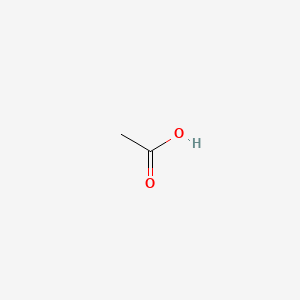
Acetic acid is a simple monocarboxylic acid containing two carbons. It has a role as a protic solvent, a food acidity regulator, an antimicrobial food preservative and a Daphnia magna metabolite. It is a conjugate acid of an acetate.
Research Context
Acetic acid, also widely known as ethanoic acid or vinegar acid, is a key organic compound extensively utilized across various fields of research and industry. Its applications span from agriculture to biochemistry, making it a versatile reagent in laboratory settings. In agricultural research, acetic acid is employed as a natural herbicide and fungicide due to its ability to disrupt cellular processes in unwanted plants and microbes.
Mechanism of Action
The mechanism of action of acetic acid primarily revolves around its ability to lower the pH of the environment, which can inhibit the growth of certain pathogens and pests. By inducing cellular stress and disrupting membrane integrity, acetic acid effectively compromises the viability of harmful organisms. This property is leveraged in various applications, from preserving food to developing eco-friendly pest control strategies.
Solubility and Storage Advice
Acetic acid is highly soluble in water, allowing for easy integration into aqueous solutions for various experimental applications. However, it is important to store acetic acid in a cool, well-ventilated area, away from incompatible substances such as strong oxidizers and bases. Containers should be tightly sealed to prevent evaporation and contamination, as prolonged exposure to air can lead to the formation of peracetic acid, a potentially hazardous compound.
Future Research Directions
Future research involving acetic acid is poised to explore novel applications in green chemistry and sustainable practices. Investigating the role of acetic acid in bioplastics and biodegradable materials may pave the way for eco-friendly alternatives to conventional plastics. Additionally, ongoing studies into its effectiveness as a natural preservative in food science could enhance food safety while minimizing the use of synthetic preservatives. Researchers are also examining the potential of acetic acid in metabolic pathways, particularly in the context of energy production and storage in biological systems.
In summary, acetic acid remains a critical compound in chemical research, with diverse applications and promising avenues for future exploration.
Need this compound? Check current availability and pricing.
| CAS Number | 64-19-7 |
|---|---|
| Formula | C2H4O2 |
| Mol. Weight | 60.05 g/mol |
| IUPAC Name | acetic acid |
| Grade | Research Grade |
Technical Support & Logistics
Storage & Handling: Acetic Acid is strictly allocated for laboratory research use (RUO). Shipped in anti-static packaging.