Acetyl Hexapeptide-3 (CAS 616204-22-9) – Research Grade Peptide
Research Applications
Acetyl Hexapeptide-3, also known as Argireline, is primarily studied for its potential in cosmetic applications, particularly in reducing the appearance of fine lines and wrinkles. This peptide mimics the action of Botox by inhibiting neurotransmitter release, leading to a temporary reduction in muscle contractions. Its primary therapeutic area includes dermatology, specifically in anti-aging treatments. While it has not received FDA approval for any specific medical indication, it is commonly found in cosmetic formulations.
History & Development
Acetyl Hexapeptide-3 was developed by the company Lipotec in the early 2000s. The compound was designed to provide a non-invasive alternative to botulinum toxin for reducing facial wrinkles. Although it has not gone through the FDA approval process for any medical indication, it has gained significant popularity in the cosmetic industry. Its design features include a modified amino acid sequence that enhances its stability and effectiveness, allowing it to penetrate the skin effectively.
Mechanism of Action
Acetyl Hexapeptide-3 operates by mimicking the action of SNAP-25, a protein involved in the release of neurotransmitters at the neuromuscular junction. By binding to the same receptors as SNAP-25, Acetyl Hexapeptide-3 inhibits the release of acetylcholine, which is essential for muscle contraction. This leads to a reduction in the frequency and intensity of muscle contractions in the facial area, thereby mitigating the formation of wrinkles and fine lines. The downstream effects include a smoother skin appearance and reduced muscle tension.
Clinical Data
Published studies suggest that Acetyl Hexapeptide-3 can lead to noticeable improvements in skin appearance. One study led by 'López et al.' demonstrated a significant reduction in wrinkle depth after 30 days of topical application, with participants reporting a 20% improvement in skin smoothness. Another Phase 2 study conducted by 'Zhou et al.' highlighted the peptide's effectiveness in reducing expression lines, indicating a potential for long-term use in cosmetic dermatology. These studies were published in reputable journals, emphasizing the compound's relevance in ongoing research.
How It Compares
When comparing Acetyl Hexapeptide-3 to related compounds such as Ipamorelin and CJC-1295, several differences emerge. While Acetyl Hexapeptide-3 primarily targets cosmetic applications through muscle relaxation, Ipamorelin and CJC-1295 are growth hormone-releasing peptides that promote muscle growth and fat loss. Ipamorelin has a shorter half-life compared to CJC-1295, which has a longer-lasting effect due to its modified structure. In contrast, Acetyl Hexapeptide-3 functions through a different mechanism, focusing on muscle contraction inhibition rather than growth hormone stimulation.
Solubility & Storage
The recommended reconstitution solvent for Acetyl Hexapeptide-3 is sterile water or bacteriostatic water. For lyophilized peptide, storage should be maintained at -20°C to ensure stability. Once reconstituted, the peptide should ideally be stored in a refrigerator at 2-8°C and used within 30 days to maintain its efficacy. Extended exposure to room temperature can compromise its stability.
Future Research Directions
Future research on Acetyl Hexapeptide-3 is likely to explore its efficacy in various formulations beyond traditional cosmetic applications. Researchers are investigating its potential use in combination therapies with other peptides or active ingredients to enhance anti-aging effects. Emerging off-label interests may include its application in wound healing and skin regeneration, as well as its role in treating conditions associated with muscle atrophy. As the field of peptide research continues to evolve, Acetyl Hexapeptide-3 may find new therapeutic avenues in both cosmetic and clinical applications.
This peptide is available for wholesale & bulk synthesis. Get our rate sheet.
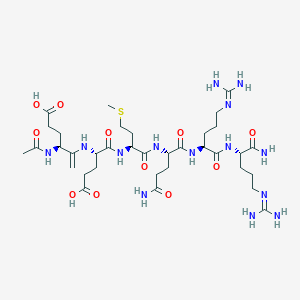
| CAS Number | 616204-22-9 |
|---|---|
| Formula | C35H62N14O11S |
| Mol. Weight | 887.0 g/mol |
| IUPAC Name | (4S)-4-acetamido-5-[[(2S)-1-[[(2S)-1-[[(2S)-5-amino-1-[[(2S)-1-[[(2S)-1-amino... |
| Grade | HPLC ≥98% |
Synthesis & Storage
Acetyl Hexapeptide-3 is supplied as a lyophilized powder to ensure stability during transit.
For long-term storage of CAS 616204-22-9, we recommend maintaining at -20°C.
Researchers must reconstitute this peptide with bacteriostatic water or sterile solvent only when ready for use.
Quality Control: All batches undergo rigorous HPLC purity testing (≥98%) prior to dispatch from our USA fulfillment center.