Caffeine (CAS 58-08-2) – Research Grade
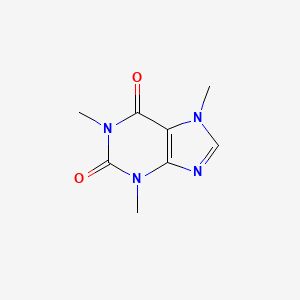
Caffeine is a trimethylxanthine in which the three methyl groups are located at positions 1, 3, and 7. A purine alkaloid that occurs naturally in tea and coffee. It has a role as a central nervous system stimulant, an EC 3.1.4.* (phosphoric diester hydrolase) inhibitor, an adenosine receptor antagonist, an EC 2.7.11.1 (non-specific serine/threonine protein kinase) inhibitor, a ryanodine receptor agonist, a fungal metabolite, an adenosine A2A receptor antagonist, a psychotropic drug, a diuretic, a food additive, an adjuvant, a plant metabolite, an environmental contaminant, a xenobiotic, a human blood serum metabolite, a mouse metabolite, a geroprotector and a mutagen. It is a purine alkaloid and a trimethylxanthine.
Research Context
Caffeine, a well-known stimulant commonly found in coffee and tea, has garnered significant attention in various fields of research due to its physiological effects and potential therapeutic applications. As a psychoactive substance, caffeine is widely studied for its impact on cognitive function, alertness, and mood enhancement. Its role in enhancing athletic performance has also been extensively researched, making it a popular supplement among athletes.
Mechanism of Action
The primary mechanism of action of caffeine involves antagonism of adenosine receptors, particularly A1 and A2A subtypes. By blocking adenosine, a neurotransmitter that promotes sleep and relaxation, caffeine increases neuronal firing and the release of neurotransmitters such as dopamine and norepinephrine. This action contributes to its stimulant effects, improving attention and reducing the perception of fatigue. Additionally, caffeine has been shown to enhance metabolic rate and fat oxidation, further supporting its use in exercise and weight management studies.
Solubility and Storage
Caffeine is soluble in water, alcohol, and ether, which facilitates its use in various formulations, including beverages and pharmaceuticals. For optimal storage, caffeine should be kept in a cool, dry place, away from light and moisture, to maintain its stability and potency. Proper storage conditions are essential for preserving the integrity of caffeine in both powdered and liquid forms.
Future Research Directions
Future research on caffeine is poised to explore its potential therapeutic roles beyond stimulation. Investigations into its neuroprotective properties suggest promising implications for conditions such as Alzheimer's disease and Parkinson's disease. Furthermore, studies are increasingly focusing on individual variations in caffeine metabolism and sensitivity, which may lead to personalized dietary recommendations. The exploration of caffeine's effects on mental health, particularly in relation to anxiety and depression, is another exciting avenue for future research. Overall, caffeine continues to be a subject of interest across multiple disciplines, reflecting its versatility and significance in both health and performance contexts.
Need this compound? Check current availability and pricing.
| CAS Number | 58-08-2 |
|---|---|
| Formula | C8H10N4O2 |
| Mol. Weight | 194.19 g/mol |
| IUPAC Name | 1,3,7-trimethylpurine-2,6-dione |
| Grade | Research Grade |
Technical Support & Logistics
Storage & Handling: Caffeine is strictly allocated for laboratory research use (RUO). Shipped in anti-static packaging.