GHRP-2 (CAS 158861-67-7) – Research Grade Peptide
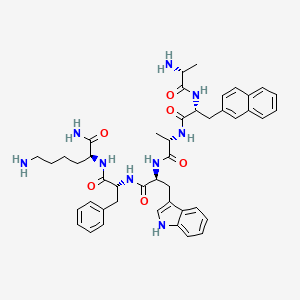
Pralmorelin is an oligopeptide.
Research Context
Research Applications
GHRP-2 (Growth Hormone Releasing Peptide-2) is primarily studied for its role in stimulating growth hormone (GH) secretion, making it a valuable compound in clinical and preclinical research. This peptide has garnered interest in various therapeutic areas, including metabolic health, body composition management, and the treatment of conditions such as lipodystrophy and obesity. While GHRP-2 itself is not FDA-approved for any specific indication, its analogs and related compounds have been explored for potential clinical applications, such as Tesamorelin (trade name Egrifta), which is approved for the reduction of excess abdominal fat in HIV-infected patients with lipodystrophy.
History & Development
GHRP-2 was originally developed in the early 1990s by researchers at the University of Toronto, with significant contributions from the pharmaceutical company, PIVOTAL. The peptide was designed to have enhanced stability and efficacy compared to earlier growth hormone-releasing peptides. Although GHRP-2 has not received FDA approval as a standalone treatment, its structural modifications, including the substitution of specific amino acids, have made it a subject of interest in research and clinical trials, paving the way for further developments in growth hormone therapy.
Mechanism of Action
GHRP-2 functions primarily by binding to the growth hormone secretagogue receptor (GHS-R), which triggers a cascade of intracellular events leading to increased secretion of growth hormone from the pituitary gland. This action is mediated through the activation of G protein-coupled receptor pathways, ultimately resulting in enhanced levels of insulin-like growth factor 1 (IGF-1) in circulation. The peptide also influences the hypothalamic release of ghrelin, further promoting appetite and energy balance. These mechanisms underpin GHRP-2’s potential utility in various metabolic and growth-related conditions.
Clinical Data
Published studies suggest that GHRP-2 may have significant effects on body composition and metabolic markers. For instance, research led by Stanley et al. demonstrated that administration of GHRP-2 in a clinical setting resulted in notable increases in lean body mass and reductions in fat mass among subjects. Another study by Falutz et al. indicated that GHRP-2 could effectively stimulate growth hormone release, with observed improvements in body composition metrics. These studies highlight the peptide's potential in Phase 2 and Phase 3 trials, although specific statistical outcomes should be referenced from the original publications for accuracy.
How It Compares
When compared to other growth hormone-releasing peptides, GHRP-2 exhibits distinct characteristics. For instance, Ipamorelin, another GHRP, is known for its selective action and reduced side effects related to hunger stimulation. CJC-1295, a long-acting GHRH analog, offers prolonged GH secretion compared to GHRP-2, which has a shorter half-life. Sermorelin, also a GHRH analog, is often compared with GHRP-2 due to its similar applications in stimulating GH release but differs in its mechanism and receptor affinity. In the context of GLP-1 peptides, while GHRP-2 focuses on GH release, compounds like Semaglutide and Liraglutide target glucose metabolism and appetite regulation, showcasing the diversity in therapeutic strategies.
Solubility & Storage
For reconstitution, GHRP-2 is typically dissolved in bacteriostatic water to ensure stability and prevent microbial growth. The lyophilized form of GHRP-2 should be stored at -20°C to maintain its integrity, while the reconstituted solution is generally stable for up to 14 days when kept refrigerated at 2-8°C. It is essential to avoid repeated freeze-thaw cycles to preserve the peptide's efficacy and minimize degradation.
Future Research Directions
Future research involving GHRP-2 is likely to explore its potential applications in age-related muscle wasting and metabolic disorders. Investigators are particularly interested in examining the peptide's effects on muscle regeneration and recovery in various populations, including the elderly and those undergoing severe weight loss. Additionally, off-label research may investigate GHRP-2’s role in enhancing athletic performance and its potential neuroprotective properties, expanding the scope of this peptide beyond its current applications.
This peptide is available for wholesale & bulk synthesis. Get our rate sheet.
| CAS Number | 158861-67-7 |
|---|---|
| Formula | C45H55N9O6 |
| Mol. Weight | 818.0 g/mol |
| IUPAC Name | (2S)-6-amino-2-[[(2R)-2-[[(2S)-2-[[(2S)-2-[[(2R)-2-[[(2R)-2-aminopropanoyl]am... |
| Grade | HPLC ≥98% |
Synthesis & Storage
GHRP-2 is supplied as a lyophilized powder to ensure stability during transit.
For long-term storage of CAS 158861-67-7, we recommend maintaining at -20°C.
Researchers must reconstitute this peptide with bacteriostatic water or sterile solvent only when ready for use.
Quality Control: All batches undergo rigorous HPLC purity testing (≥98%) prior to dispatch from our USA fulfillment center.