Glutathione (CAS 70-18-8) – Research Grade
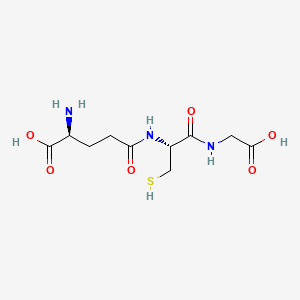
Glutathione is a tripeptide compound consisting of glutamic acid attached via its side chain to the N-terminus of cysteinylglycine. It has a role as a skin lightening agent, a human metabolite, an Escherichia coli metabolite, a mouse metabolite, a geroprotector, an antioxidant and a cofactor. It is a tripeptide, a thiol and a L-cysteine derivative. It is a conjugate acid of a glutathionate(1-).
Research Context
Glutathione, often referred to as GSH, is a tripeptide composed of three amino acids: glutamine, cysteine, and glycine. It plays a crucial role in various biological processes, primarily known for its function as a powerful antioxidant. This compound is pivotal in protecting cells from oxidative stress and maintaining cellular homeostasis. Its research applications span across multiple fields, including biochemistry, pharmacology, and toxicology.
Research Applications
Glutathione is widely studied for its role in detoxification processes, where it conjugates with potentially harmful substances, facilitating their excretion. This property makes it a critical focus in research concerning liver health and the detoxification of drugs and environmental toxins. Additionally, glutathione is being explored for its potential therapeutic applications in neurodegenerative diseases, cancer, and immune system support. Studies suggest that maintaining adequate levels of GSH can enhance the immune response and may play a role in mitigating the effects of aging.
Mechanism of Action
The mechanism of action of glutathione primarily revolves around its ability to scavenge free radicals and reactive oxygen species (ROS). By doing so, it reduces oxidative damage to vital cellular components, including lipids, proteins, and DNA. Furthermore, GSH participates in various enzymatic reactions, including the synthesis of leukotrienes and prostaglandins, which are important for inflammatory responses.
Solubility and Storage Advice
Glutathione is soluble in water, which allows for easy incorporation into biological studies and formulations. However, it is sensitive to oxidation and should be stored under reduced conditions to maintain its stability. It is recommended to store glutathione in a cool, dry place, ideally at -20°C, to prolong its shelf life and activity.
Future Research Directions
Future research on glutathione is likely to explore its role in various disease pathways and its potential as a therapeutic agent. Investigating the balance between oxidized and reduced forms of glutathione in cells may provide insights into various pathological conditions. Additionally, the development of novel delivery systems for glutathione supplementation could enhance its therapeutic efficacy and bioavailability, leading to more effective treatments for oxidative stress-related diseases.
Need this compound? Check current availability and pricing.
| CAS Number | 70-18-8 |
|---|---|
| Formula | C10H17N3O6S |
| Mol. Weight | 307.33 g/mol |
| IUPAC Name | (2S)-2-amino-5-[[(2R)-1-(carboxymethylamino)-1-oxo-3-sulfanylpropan-2-yl]amin... |
| Grade | Research Grade |
Technical Support & Logistics
Storage & Handling: Glutathione is strictly allocated for laboratory research use (RUO). Shipped in anti-static packaging.