Lixisenatide (CAS 320367-13-3) – Research Grade Peptide
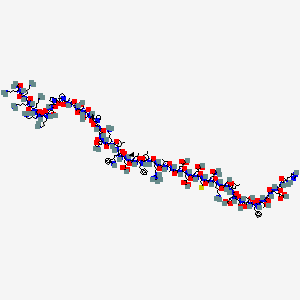
Lixisenatide is a forty-four membered polypeptide consisting of L-His, Gly, L-Glu, Gly, L-Thr, L-Phe, L-Thr, L-Ser, L-Asp, L-Leu, L-Ser, L-Lys, L-Gln, L-Met, L-Glu, L-Glu, L-Glu, L-Ala, L-Val, L-Arg, L-Leu, L-Phe, L-Ile, L-Glu, L-Trp, L-Leu, L-Lys, L-Asn, Gly, Gly, LPro, L-Ser, L-Ser, Gly, L-Ala, L-Pro, L-Pro, L-Ser, L-Lys, L-Lys, L-Lys, L-Lys, L-Lys, and L-Lys-NH2 residues joined in sequence. Used as an adjunct to diet and exercise for the treatment of adults with type II diabetes. It has a role as a hypoglycemic agent, a neuroprotective agent and a glucagon-like peptide-1 receptor agonist. It is a peptidyl amide and a polypeptide.
Research Context
Research Applications
Lixisenatide is primarily studied for its potential in treating type 2 diabetes mellitus and associated metabolic disorders. This peptide is a glucagon-like peptide-1 (GLP-1) receptor agonist, which aids in enhancing insulin secretion in response to meals, thereby helping to regulate blood sugar levels. Additionally, it is being researched in therapeutic areas such as obesity, cardiovascular health, and weight management, given its effects on appetite suppression and body weight reduction. Lixisenatide is marketed under the trade name Adlyxin and has gained attention for its role in improving metabolic health and body composition.
History & Development
Lixisenatide was developed by the pharmaceutical company Sanofi in collaboration with the Danish biotech company Zealand Pharma. The peptide's development began in the early 2000s, and it received FDA approval in 2016 for the treatment of type 2 diabetes. The indication for Lixisenatide focuses on improving glycemic control in adults with this condition. One notable design feature of Lixisenatide is its resistance to dipeptidyl peptidase-4 (DPP-4), which prolongs its half-life and enhances its therapeutic efficacy compared to endogenous GLP-1.
Mechanism of Action
Lixisenatide functions as a GLP-1 receptor agonist, mimicking the effects of the naturally occurring GLP-1 hormone. Upon administration, Lixisenatide binds to GLP-1 receptors located in the pancreas and other tissues. This binding triggers a cascade of biological responses that include stimulating insulin secretion from pancreatic beta cells, inhibiting glucagon release, and slowing gastric emptying. These effects collectively contribute to improved blood glucose control and reduced postprandial (after meal) glucose levels.
Clinical Data
Published studies suggest that Lixisenatide is effective in managing blood glucose levels in individuals with type 2 diabetes. For example, a Phase 3 study led by 'Buse et al.' demonstrated that patients treated with Lixisenatide experienced a significant reduction in HbA1c levels compared to placebo. Additionally, other research indicates that Lixisenatide may lead to weight loss in diabetic patients, with some trials reporting an average weight reduction of around 2-4 kg over six months. These findings were published in reputable journals, emphasizing Lixisenatide's role in diabetes management.
How It Compares
When comparing Lixisenatide to other GLP-1 receptor agonists, such as Semaglutide and Liraglutide, several differences emerge. Semaglutide, for instance, has a longer half-life and may offer more significant weight loss benefits, while Liraglutide has been available longer and is used in both diabetes and obesity management. In terms of mechanism, while all three peptides stimulate insulin secretion and reduce glucagon levels, variations in their amino acid sequences and structural modifications influence their pharmacokinetics and clinical applications. Researchers often evaluate these compounds alongside Lixisenatide in clinical trials to determine the most effective treatment options for patients.
Solubility & Storage
For reconstitution, Lixisenatide is typically dissolved in sterile water or bacteriostatic water. The lyophilized form should be stored in a refrigerator at temperatures between 2-8°C. Once reconstituted, it is recommended to use the peptide within 14 days if stored at refrigerated temperatures. Proper storage conditions are crucial to maintain the stability and efficacy of Lixisenatide, ensuring optimal therapeutic outcomes for patients.
Future Research Directions
Researchers are exploring several future directions for Lixisenatide, including its potential use in combination therapies for type 2 diabetes and obesity. Emerging off-label research interests are focusing on its effects on cardiovascular health, particularly its impact on heart failure and other cardiovascular complications associated with diabetes. Furthermore, studies are investigating the long-term safety and efficacy of Lixisenatide in diverse populations, which may expand its therapeutic applications beyond glycemic control.
This peptide is available for wholesale & bulk synthesis. Get our rate sheet.
| CAS Number | 320367-13-3 |
|---|---|
| Formula | C215H347N61O65S |
| Mol. Weight | 4858 g/mol |
| IUPAC Name | (4S)-5-[[2-[[(2S,3R)-1-[[(2S)-1-[[(2S,3R)-1-[[(2S)-1-[[(2S)-1-[[(2S)-1-[[(2S)... |
| Grade | HPLC ≥98% |
Synthesis & Storage
Lixisenatide is supplied as a lyophilized powder to ensure stability during transit.
For long-term storage of CAS 320367-13-3, we recommend maintaining at -20°C.
Researchers must reconstitute this peptide with bacteriostatic water or sterile solvent only when ready for use.
Quality Control: All batches undergo rigorous HPLC purity testing (≥98%) prior to dispatch from our USA fulfillment center.