MK 0677 (CAS 159752-10-0) – Research Grade Peptide
Research Applications
MK 0677, also known as ibutamoren, is primarily studied for its potential applications in enhancing growth hormone levels, thereby influencing various therapeutic areas such as metabolic health, body composition, and lipodystrophy. This peptide mimics the action of ghrelin, a hormone that stimulates appetite and promotes growth hormone secretion, making it a subject of interest in treating conditions associated with growth hormone deficiency. While MK 0677 does not currently have any FDA-approved uses, its mechanisms and effects are being evaluated for potential applications in conditions like muscle wasting and obesity.
History & Development
MK 0677 was originally developed by Merck & Co. in the late 1990s. The compound was designed to be a selective growth hormone secretagogue, exploiting the ghrelin receptor pathway to stimulate endogenous growth hormone release. Although it has not received FDA approval for any specific indication, its development has undergone various phases of clinical trials to explore its efficacy and safety profile. Notably, MK 0677 features modifications that enhance its stability and resistance to enzymatic degradation, which is a common challenge in peptide therapeutics.
Mechanism of Action
MK 0677 functions as a potent and selective agonist of the growth hormone secretagogue receptor (GHSR). Upon binding to GHSR, it initiates a cascade of intracellular events that ultimately leads to increased secretion of growth hormone from the anterior pituitary gland. This increase in growth hormone levels is associated with a variety of downstream effects, including enhanced lipolysis, increased muscle mass, and improved metabolic function. The activation of this receptor pathway mimics the physiological effects of ghrelin, contributing to its appeal in research focused on metabolic disorders and body composition.
Clinical Data
Published studies suggest that MK 0677 has shown promise in clinical settings. For instance, a Phase 2 study led by Friedman et al. indicated that treatment with MK 0677 resulted in significant increases in lean body mass and reductions in fat mass among older adults. Another study by Gonzalez et al. demonstrated that MK 0677 administration led to improvements in body composition and metabolic parameters in subjects with growth hormone deficiency. These findings highlight the potential of MK 0677 as a therapeutic option in various clinical scenarios, although further research is necessary to solidify these outcomes.
How It Compares
MK 0677 is often evaluated alongside other growth hormone peptides such as Ipamorelin, CJC-1295, and Sermorelin. Each of these compounds has unique mechanisms and properties:
- Ipamorelin: Known for its selective action and minimal side effects, Ipamorelin stimulates growth hormone release without significantly affecting cortisol levels.
- CJC-1295: This peptide is a long-acting growth hormone-releasing hormone (GHRH) analog that promotes sustained growth hormone release, contrasting with MK 0677's rapid action.
- Sermorelin: Similar to CJC-1295, Sermorelin acts as a GHRH analog but has a shorter half-life, requiring more frequent dosing compared to MK 0677.
These differences in mechanism and pharmacokinetics influence their research applications and therapeutic potential.
Solubility & Storage
The recommended solvent for reconstituting MK 0677 is bacteriostatic water, which helps maintain the stability of the peptide. For storage, lyophilized MK 0677 should be kept at -20°C to ensure long-term stability, while the reconstituted solution is best stored at 2-8°C and typically remains stable for about 2 weeks. Care should be taken to protect the peptide from light and moisture to preserve its integrity.
Future Research Directions
Researchers are exploring various future applications of MK 0677, particularly in the context of age-related muscle loss and metabolic disorders. There is growing interest in its potential off-label use for improving body composition in populations experiencing sarcopenia or cachexia. Additionally, studies are investigating its effects on bone density and overall metabolic health, which may lead to broader therapeutic applications. As research continues, MK 0677 may play a significant role in developing novel interventions for conditions related to growth hormone deficiencies.
This peptide is available for wholesale & bulk synthesis. Get our rate sheet.
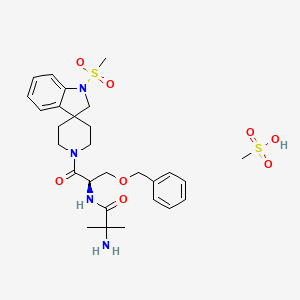
| CAS Number | 159752-10-0 |
|---|---|
| Formula | C28H40N4O8S2 |
| Mol. Weight | 624.8 g/mol |
| IUPAC Name | 2-amino-2-methyl-N-[(2R)-1-(1-methylsulfonylspiro[2H-indole-3,4'-piperidine]-... |
| Grade | HPLC ≥98% |
Synthesis & Storage
MK 0677 is supplied as a lyophilized powder to ensure stability during transit.
For long-term storage of CAS 159752-10-0, we recommend maintaining at -20°C.
Researchers must reconstitute this peptide with bacteriostatic water or sterile solvent only when ready for use.
Quality Control: All batches undergo rigorous HPLC purity testing (≥98%) prior to dispatch from our USA fulfillment center.