Nicotinamide (CAS 98-92-0) – Research Grade
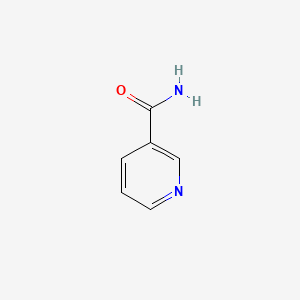
Nicotinamide is a pyridinecarboxamide that is pyridine in which the hydrogen at position 3 is replaced by a carboxamide group. It has a role as an EC 2.4.2.30 (NAD(+) ADP-ribosyltransferase) inhibitor, a metabolite, a cofactor, an antioxidant, a neuroprotective agent, an EC 3.5.1.98 (histone deacetylase) inhibitor, an anti-inflammatory agent, a Sir2 inhibitor, a Saccharomyces cerevisiae metabolite, an Escherichia coli metabolite, a mouse metabolite, a human urinary metabolite and a geroprotector. It is a vitamin B3, a pyridinecarboxamide and a pyridine alkaloid. It is functionally related to a nicotinic acid.
Research Context
Nicotinamide, also known as niacinamide or nicotinic acid amide, is a versatile compound with a range of research applications in biochemistry and pharmacology. It is a form of vitamin B3 that plays a critical role in cellular metabolism and has garnered interest for its potential therapeutic effects in various health conditions, including skin disorders, neurodegenerative diseases, and metabolic disorders.
Research Applications
In dermatological research, nicotinamide is widely studied for its ability to improve skin barrier function, reduce inflammation, and enhance the skin's overall appearance. It has been shown to be effective in treating acne, rosacea, and hyperpigmentation. Additionally, its antioxidant properties make it a valuable compound in anti-aging research, as it can protect skin cells from oxidative stress.
Beyond dermatology, nicotinamide is being explored for its neuroprotective effects. Studies suggest that it may help in the prevention and treatment of Alzheimer's disease and other neurodegenerative conditions by supporting neuronal health and reducing inflammation. Furthermore, its role in energy metabolism and DNA repair mechanisms positions nicotinamide as a potential candidate for research in metabolic syndromes and age-related diseases.
Mechanism of Action
Nicotinamide exerts its effects primarily through the synthesis of NAD+ (nicotinamide adenine dinucleotide), an essential coenzyme involved in redox reactions and energy production in cells. By increasing the levels of NAD+, nicotinamide enhances cellular metabolism, promotes DNA repair, and modulates various signaling pathways that are crucial for maintaining cellular health.
Solubility and Storage Advice
Nicotinamide is highly soluble in water and ethanol, making it suitable for various formulations in both pharmaceutical and cosmetic applications. It should be stored in a cool, dry place, away from direct sunlight to maintain its stability and efficacy.
Future Research Directions
Future research on nicotinamide is likely to focus on its potential as an adjunct therapy in chronic diseases, particularly in understanding its mechanisms in mitochondrial function and aging. Additionally, the development of novel delivery systems for enhanced bioavailability and targeted action remains a key area for exploration, which could maximize its therapeutic benefits.
Need this compound? Check current availability and pricing.
| CAS Number | 98-92-0 |
|---|---|
| Formula | C6H6N2O |
| Mol. Weight | 122.12 g/mol |
| IUPAC Name | pyridine-3-carboxamide |
| Grade | Research Grade |
Technical Support & Logistics
Storage & Handling: Nicotinamide is strictly allocated for laboratory research use (RUO). Shipped in anti-static packaging.