Potassium Phosphate, Dibasic (CAS 7758-11-4) – Research Grade
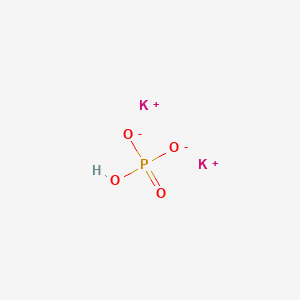
Dipotassium hydrogen phosphate is a potassium salt that is the dipotassium salt of phosphoric acid. It has a role as a buffer. It is a potassium salt and an inorganic phosphate.
Research Context
Potassium Phosphate, Dibasic, commonly referred to as dipotassium phosphate or potassium hydrogen phosphate, plays a pivotal role in various research applications across multiple fields, including biochemistry, agriculture, and pharmaceuticals. In biochemistry, it is frequently utilized as a buffering agent and a source of potassium and phosphate ions necessary for cellular functions. This compound aids in maintaining pH levels in biological systems, making it essential for enzyme activity and metabolic processes.
Mechanism of Action
The mechanism of action of Potassium Phosphate, Dibasic is primarily based on its ability to dissociate into potassium and phosphate ions in aqueous solutions. This dissociation supports cellular osmoregulation and acts as a precursor for nucleic acid synthesis and energy transfer through ATP. Moreover, in agricultural applications, it enhances nutrient uptake in plants, promoting robust growth and improved crop yields.
Solubility and Storage Advice
Potasium Phosphate, Dibasic is highly soluble in water, allowing for easy incorporation into various formulations. It is advisable to store this compound in a cool, dry place, away from incompatible substances. When handling, it is essential to use appropriate personal protective equipment to minimize exposure, as high concentrations can cause irritation.
Future Research Directions
Future research on Potassium Phosphate, Dibasic is likely to explore its potential roles in advanced agricultural practices, particularly in sustainable farming and hydroponics. Researchers are also investigating its applications in drug formulation, focusing on enhancing bioavailability and stability of therapeutic agents. Additionally, studies examining the compound’s effects on cellular signaling pathways could yield insights into its roles in disease prevention and treatment strategies.
Overall, Potassium Phosphate, Dibasic remains a versatile compound with significant implications for scientific advancement across diverse research sectors.
Need this compound? Check current availability and pricing.
| CAS Number | 7758-11-4 |
|---|---|
| Formula | HK2O4P |
| Mol. Weight | 174.176 g/mol |
| IUPAC Name | dipotassium;hydrogen phosphate |
| Grade | Research Grade |
Technical Support & Logistics
Storage & Handling: Potassium Phosphate, Dibasic is strictly allocated for laboratory research use (RUO). Shipped in anti-static packaging.