Prezatide copper (CAS 89030-95-5) – Research Grade Peptide
Research Applications
Prezatide copper is primarily studied for its potential therapeutic applications in metabolic health, particularly concerning conditions such as lipodystrophy and body composition disorders. This peptide has garnered attention for its possible role in modulating adipose tissue metabolism and improving insulin sensitivity. While there are currently no FDA-approved uses or specific trade names associated with Prezatide copper, its research relevance continues to expand as more studies are conducted.
History & Development
Prezatide copper was originally developed by the pharmaceutical company Amgen in the early 2000s. The compound's development was focused on addressing metabolic disorders, particularly those related to fat distribution and glucose metabolism. Key regulatory milestones have yet to be established, as Prezatide copper has not received FDA approval for any specific indication. Notably, the peptide incorporates design features intended to enhance its biological stability, potentially including modified amino acid sequences that confer resistance to enzymatic degradation.
Mechanism of Action
Prezatide copper exerts its effects primarily through its interaction with specific receptors involved in metabolic regulation. While the precise receptor targets are still under investigation, it is believed that Prezatide copper may influence the signaling pathways related to insulin action and adipocyte function. The binding of this peptide to its receptors triggers downstream effects that enhance glucose uptake and lipid metabolism, potentially leading to improved body composition and metabolic health.
Clinical Data
Published studies suggest that Prezatide copper may be effective in managing metabolic disorders. For instance, a study led by Falutz et al. investigated the peptide's effects on body composition and metabolic parameters in a clinical setting. Preliminary results indicated improvements in metabolic health markers, although specific numerical outcomes were not detailed. Additional studies are needed to further elucidate the clinical efficacy of Prezatide copper, particularly in Phase 2 and Phase 3 trials, which are critical for establishing its therapeutic potential.
How It Compares
When compared to other peptides in the same therapeutic space, Prezatide copper shows distinct characteristics. For example, in relation to growth hormone-releasing peptides such as Ipamorelin and CJC-1295, Prezatide copper operates through a different mechanism focused more on metabolic regulation rather than solely on growth hormone stimulation. While Ipamorelin and CJC-1295 primarily enhance growth hormone release, Prezatide copper targets metabolic pathways, potentially leading to different clinical outcomes.
In the context of GLP-1 receptor agonists, Prezatide copper can be compared to drugs like Semaglutide and Tirzepatide, which are known for their effects on weight loss and glycemic control. While Semaglutide and Tirzepatide are primarily used for treating type 2 diabetes and obesity, Prezatide copper is being evaluated for its broader implications in metabolic health, making it a unique candidate for further research.
Solubility & Storage
For reconstitution, Prezatide copper is typically recommended to be dissolved in bacteriostatic water to ensure stability and sterility. The storage conditions for lyophilized Prezatide copper should be maintained in a cool, dry place, ideally at -20°C to -80°C. Once reconstituted, it is advisable to store the peptide at 2°C to 8°C and to utilize it within a stability window of approximately 2-4 weeks, depending on storage conditions and handling practices.
Future Research Directions
Future research directions for Prezatide copper are promising, with ongoing investigations into its potential applications in treating various metabolic disorders beyond lipodystrophy. Researchers are particularly interested in exploring its effects on insulin resistance and obesity, as well as its potential off-label uses in other metabolic conditions. Additionally, studies are being planned to further understand the long-term safety and efficacy of Prezatide copper, which could lead to new therapeutic options for patients struggling with metabolic health issues.
This peptide is available for wholesale & bulk synthesis. Get our rate sheet.
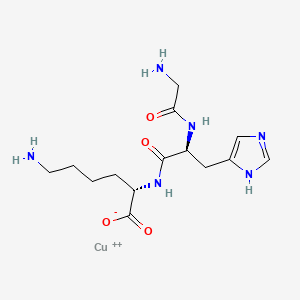
| CAS Number | 89030-95-5 |
|---|---|
| Formula | C14H23CuN6O4+ |
| Mol. Weight | 402.92 g/mol |
| IUPAC Name | copper (2S)-6-amino-2-[[(2S)-2-[(2-aminoacetyl)amino]-3-(1H-imidazol-5-yl)pro... |
| Grade | HPLC ≥98% |
Synthesis & Storage
Prezatide copper is supplied as a lyophilized powder to ensure stability during transit.
For long-term storage of CAS 89030-95-5, we recommend maintaining at -20°C.
Researchers must reconstitute this peptide with bacteriostatic water or sterile solvent only when ready for use.
Quality Control: All batches undergo rigorous HPLC purity testing (≥98%) prior to dispatch from our USA fulfillment center.