Setmelanotide (CAS 920014-72-8) – Research Grade Peptide
Research Applications
Setmelanotide is primarily studied for its role in addressing obesity and metabolic disorders, particularly those linked to genetic deficiencies in the melanocortin-4 receptor (MC4R). This peptide is being investigated in therapeutic areas such as congenital leptin deficiency, POMC deficiency, and other forms of obesity associated with genetic mutations. Setmelanotide is noteworthy as it has received FDA approval for the treatment of obesity caused by these specific genetic conditions, marketed under the trade name Imcivree.
History & Development
Setmelanotide was developed by Rhythm Pharmaceuticals, a biotechnology company focused on leveraging the melanocortin pathway to treat metabolic diseases. The peptide's development began in the early 2010s, with significant advancements leading to its submission for FDA approval. In December 2020, Setmelanotide received FDA approval for the treatment of obesity due to POMC deficiency, leptin receptor deficiency, and other MC4R pathway-related disorders. Notable design features of Setmelanotide include its modified amino acid sequence, which enhances its stability and receptor affinity, making it more effective in clinical applications.
Mechanism of Action
Setmelanotide acts as a selective agonist of the melanocortin-4 receptor (MC4R), which plays a critical role in regulating appetite and energy expenditure. By binding to MC4R, Setmelanotide activates downstream signaling pathways that promote weight loss and improve metabolic health. This mechanism is particularly beneficial for individuals with genetic mutations affecting the MC4R pathway, as it compensates for the lack of natural ligand activity, ultimately leading to reduced food intake and enhanced energy expenditure.
Clinical Data
Clinical studies have demonstrated the efficacy of Setmelanotide in managing obesity linked to specific genetic disorders. For instance, a Phase 3 study led by Sharma et al. reported significant weight loss in patients with POMC deficiency, with many participants achieving a reduction in body weight over the treatment period. Additional studies have suggested improvements in metabolic parameters and overall quality of life among participants. These findings underscore the peptide's potential as a targeted therapy for genetically driven obesity.
How It Compares
When compared to other peptides targeting obesity and metabolic health, Setmelanotide shows distinct differences in mechanism and application. For example, while GLP-1 receptor agonists like Semaglutide and Liraglutide enhance glucose-dependent insulin secretion and decrease appetite, Setmelanotide specifically targets the melanocortin pathway to directly influence energy balance and body weight. Additionally, the half-life of Setmelanotide allows for less frequent dosing compared to some GLP-1 peptides, making it a convenient option for patients. In contrast, compounds like Ipamorelin and CJC-1295 primarily stimulate growth hormone release, which can also lead to fat loss but through different physiological pathways.
Solubility & Storage
Setmelanotide is typically reconstituted using sterile water or bacteriostatic water, ensuring that the peptide remains viable for research purposes. For optimal stability, the lyophilized form should be stored at -20°C or colder. Once reconstituted, it is recommended to store Setmelanotide at 2-8°C, with a typical stability window of 30 days when kept under these conditions. Proper handling and storage are crucial for maintaining the peptide's integrity and effectiveness.
Future Research Directions
Future research involving Setmelanotide is likely to explore its efficacy in broader populations beyond those with specific genetic conditions. Researchers are investigating its potential off-label applications for obesity management in more generalized cohorts. Additionally, there is growing interest in understanding how Setmelanotide may affect other metabolic parameters and its long-term safety profile. As research evolves, Setmelanotide may also be explored in combination therapies with other metabolic agents to enhance its therapeutic effects.
This peptide is available for wholesale & bulk synthesis. Get our rate sheet.
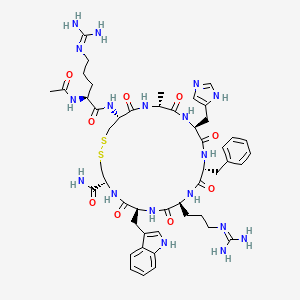
| CAS Number | 920014-72-8 |
|---|---|
| Formula | C49H68N18O9S2 |
| Mol. Weight | 1117.3 g/mol |
| IUPAC Name | (4R,7S,10S,13R,16S,19R,22R)-22-[[(2S)-2-acetamido-5-(diaminomethylideneamino)... |
| Grade | HPLC ≥98% |
Synthesis & Storage
Setmelanotide is supplied as a lyophilized powder to ensure stability during transit.
For long-term storage of CAS 920014-72-8, we recommend maintaining at -20°C.
Researchers must reconstitute this peptide with bacteriostatic water or sterile solvent only when ready for use.
Quality Control: All batches undergo rigorous HPLC purity testing (≥98%) prior to dispatch from our USA fulfillment center.