Sodium Hydroxide (CAS 1310-73-2) – Research Grade
Sodium hydroxide is an alkali metal hydroxide.
Research Context
Sodium hydroxide, commonly known as caustic soda or lye, is a highly versatile chemical with a wide range of research applications across various fields including chemistry, biology, and material science. Its primary use is in the manufacturing of various chemicals, soap production, and as a strong base in chemical reactions. In analytical chemistry, sodium hydroxide is frequently employed in titration processes, particularly for determining the concentration of acidic solutions.
Mechanism of Action
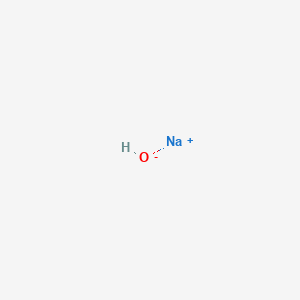
The mechanism of action of sodium hydroxide is primarily based on its ability to dissociate into sodium and hydroxide ions in aqueous solutions. The hydroxide ions act as strong nucleophiles, facilitating various chemical reactions, such as hydrolysis and neutralization. This makes sodium hydroxide an effective agent for saponification, where fats and oils are converted into soap and glycerol. Additionally, it is utilized in the extraction of certain metals and minerals through acid-base reactions.
Solubility and Storage
Sodium hydroxide is highly soluble in water, generating a significant amount of heat upon dissolution. This exothermic reaction necessitates careful handling and storage. It is recommended to store sodium hydroxide in a cool, dry place in a tightly sealed container to prevent moisture absorption, which can lead to its degradation. Protective gear should always be used during handling, as it can cause severe burns and irritation upon contact with skin or eyes.
Future Research Directions
Looking ahead, future research involving sodium hydroxide may focus on its use in environmentally friendly processes, such as green chemistry applications. Researchers are exploring its potential in waste treatment processes and bioremediation, leveraging its strong alkaline properties to neutralize pollutants. Additionally, the development of more efficient synthesis methods for sodium hydroxide could lead to reduced energy consumption and lower environmental impact, supporting sustainable industrial practices.
Need this compound? Check current availability and pricing.
| CAS Number | 1310-73-2 |
|---|---|
| Formula | HNaO |
| Mol. Weight | 39.997 g/mol |
| IUPAC Name | sodium hydroxide |
| Grade | Research Grade |
Technical Support & Logistics
Storage & Handling: Sodium Hydroxide is strictly allocated for laboratory research use (RUO). Shipped in anti-static packaging.