Sodium Lauryl Sulfate (CAS 151-21-3) – Research Grade
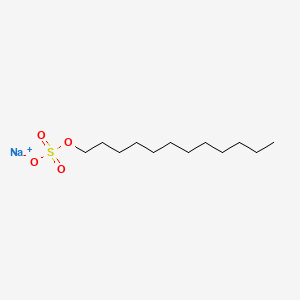
Sodium dodecyl sulfate is an organic sodium salt that is the sodium salt of dodecyl hydrogen sulfate. It has a role as a detergent and a protein denaturant. It contains a dodecyl sulfate.
Research Context
Sodium Lauryl Sulfate (SLS), also known as sodium dodecyl sulfate, is a widely utilized anionic surfactant in various industries, particularly in pharmaceuticals, cosmetics, and personal care products. Its effectiveness in solubilizing and emulsifying compounds makes it a key ingredient in formulations such as shampoos, toothpaste, and detergents. Researchers have extensively explored its applications in drug delivery systems, where its surfactant properties enhance the bioavailability of poorly soluble drugs.
Mechanism of Action
The mechanism of action of Sodium Lauryl Sulfate is primarily attributed to its ability to disrupt lipid membranes. SLS interacts with cellular membranes, leading to increased permeability and facilitating the release of active compounds. This property has made it a focal point in studies examining its role in enhancing transdermal drug delivery and its effectiveness as a penetration enhancer. Moreover, SLS exhibits antimicrobial activity, which further supports its use in various formulations aimed at controlling microbial growth.
Solubility and Storage Advice
Sodium Lauryl Sulfate is readily soluble in water, making it easy to incorporate into aqueous formulations. It is also soluble in alcohol and other organic solvents, which adds to its versatility in different applications. When storing SLS, it is crucial to keep it in a cool, dry place, away from direct sunlight and incompatible materials to maintain its stability and efficacy. Proper storage conditions will help prevent degradation and ensure the longevity of the product.
Future Research Directions
Future research on Sodium Lauryl Sulfate is likely to focus on its role in nanotechnology and targeted drug delivery systems. Investigations into the safety and biocompatibility of SLS in various formulations are also essential, especially given its widespread use. Additionally, studies examining the environmental impact of SLS and its biodegradability will be critical as regulatory pressures increase. Exploring alternative surfactants that can mimic the properties of SLS without the associated concerns may also be a significant area of research.
Need this compound? Check current availability and pricing.
| CAS Number | 151-21-3 |
|---|---|
| Formula | C12H25NaO4S |
| Mol. Weight | 288.38 g/mol |
| IUPAC Name | sodium dodecyl sulfate |
| Grade | Research Grade |
Technical Support & Logistics
Storage & Handling: Sodium Lauryl Sulfate is strictly allocated for laboratory research use (RUO). Shipped in anti-static packaging.