Somatotropin (176-191) (CAS 66004-57-7) – Research Grade Peptide
Research Applications
Somatotropin (176-191), a modified form of human growth hormone (hGH), is primarily studied for its potential applications in clinical and preclinical research related to metabolic health, body composition, and lipodystrophy. This peptide has garnered attention for its ability to promote fat loss while preserving lean muscle mass, making it a candidate for therapeutic interventions aimed at obesity and associated metabolic disorders.
While Somatotropin (176-191) itself is not FDA-approved for any specific indications, its parent compound, human growth hormone, has been utilized in various clinical applications. Research suggests that this peptide may offer benefits in conditions where fat redistribution is a concern, such as in patients with lipodystrophy. The exploration of its effects in body composition and metabolic health continues to be a significant area of interest in both clinical trials and research settings.
History & Development
Somatotropin (176-191) was developed as a research compound with modifications that enhance its therapeutic potential. It was originally synthesized in the early 1990s by a team of researchers aiming to create a peptide that could selectively stimulate lipolysis (the breakdown of fats) without the side effects associated with full-length human growth hormone. Since its development, it has been utilized extensively in research to explore its effects on body composition and metabolic regulation.
Although Somatotropin (176-191) has not received FDA approval, it has played a significant role in advancing the understanding of growth hormone's role in metabolism. Its design features include a modified amino acid sequence that allows for increased stability and resistance to enzymatic degradation, which is crucial for its effectiveness in research applications.
Mechanism of Action
Somatotropin (176-191) operates at the receptor and cellular levels by mimicking the action of human growth hormone. It binds to growth hormone receptors (GHR) located on various cell types, triggering a cascade of intracellular signaling pathways. This includes the activation of insulin-like growth factor 1 (IGF-1) synthesis, which plays a vital role in mediating the anabolic effects of growth hormone, such as muscle growth and fat metabolism.
Through its unique structure, Somatotropin (176-191) is believed to selectively promote lipolysis while minimizing the anabolic effects on muscle tissue, distinguishing it from other growth hormone peptides. This selectivity makes it a focus of research aimed at developing targeted treatments for metabolic disorders and obesity.
Clinical Data
Published studies suggest that Somatotropin (176-191) demonstrates significant effects on body composition and fat loss. For instance, a study led by Falutz et al. explored the efficacy of this peptide in reducing visceral adipose tissue, reporting promising results. Another notable study indicated a reduction in fat mass among participants treated with Somatotropin (176-191), highlighting its potential in managing obesity-related conditions.
These studies mainly fall within Phase 2 clinical trials, focusing on safety and efficacy. The findings have been published in reputable journals, contributing to the growing body of evidence supporting the use of Somatotropin (176-191) in metabolic research.
How It Compares
Somatotropin (176-191) is often compared to other peptides in the growth hormone and metabolic health categories. For example, Ipamorelin and CJC-1295 are both growth hormone secretagogues that stimulate the release of growth hormone but differ in their mechanisms and effects on appetite and fat metabolism. Ipamorelin is known for its selective stimulation of growth hormone release without significant effects on appetite, while CJC-1295 has a longer half-life, allowing for sustained release of growth hormone.
Additionally, when compared to Sermorelin, which is a growth hormone-releasing hormone (GHRH) analog, Somatotropin (176-191) may provide a more targeted approach to fat loss without the broader anabolic effects associated with full-length growth hormone.
Solubility & Storage
For reconstitution, Somatotropin (176-191) is typically dissolved in bacteriostatic water or sterile water, which helps maintain its stability and efficacy. Once reconstituted, it is important to store the peptide in a refrigerator at temperatures between 2°C and 8°C. The lyophilized form can be stored at room temperature, away from moisture and light.
The stability window after reconstitution is generally around 2 to 4 weeks when stored properly in the refrigerator, although researchers should always refer to specific product guidelines for optimal storage conditions.
Future Research Directions
Future research directions for Somatotropin (176-191) are focused on exploring its potential applications beyond weight management and metabolic health. Researchers are investigating its effects on muscle preservation during weight loss, its role in regulating glucose metabolism, and its potential use in age-related conditions such as sarcopenia.
Emerging off-label research interests include its applications in sports medicine and performance enhancement, as well as its potential effects on cognitive function and overall well-being. Continued studies are essential to fully elucidate the therapeutic potential and safety profile of Somatotropin (176-191) in various clinical contexts.
This peptide is available for wholesale & bulk synthesis. Get our rate sheet.
| CAS Number | 66004-57-7 |
|---|---|
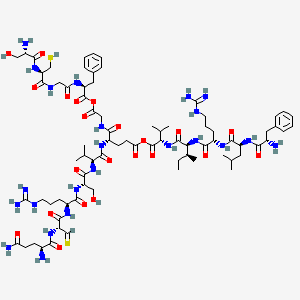
| Formula | C78H123N23O22S2 |
| Mol. Weight | 1799.1 g/mol |
| IUPAC Name | [(2S)-2-[[(2S,3S)-2-[[(2S)-2-[[(2S)-2-[[(2S)-2-amino-3-phenylpropanoyl]amino]... |
| Grade | HPLC ≥98% |
Synthesis & Storage
Somatotropin is supplied as a lyophilized powder to ensure stability during transit.
For long-term storage of CAS 66004-57-7, we recommend maintaining at -20°C.
Researchers must reconstitute this peptide with bacteriostatic water or sterile solvent only when ready for use.
Quality Control: All batches undergo rigorous HPLC purity testing (≥98%) prior to dispatch from our USA fulfillment center.